Schedule
Time
Session
8:40-9:15
0h 35m
Joint EuroSPI/ICSSP Session
8:40-9:15
EuroSPI/ICSSP Welcome
9:15-9:30
0h 15m
Break
9:30-10:30
1h
ICSSP Session
9:30-10:00
Welcome to ICSSP 2024
10:00-10:30
Breaking old Habits: On Success Factors in Software Process Improvement
10:30-11:00
0h 30m
Break
11:00-12:00
1h
ICSSP Session
11:00-11:30
Maintaining Security Consistency During System Development with Security-Oriented Model Federation
11:30-12:00
Supporting Engineering Process Compliance via Generation of Detailed Guidance Actions
12:00-13:30
1h 30m
Lunch
13:30-14:30
1h
ICSSP Session
13:30-14:30
Keynote Presentation: Process Quality and Product Quality—Is There Still a Difference and Should We Even Care?
14:30-15:30
1h
ICSSP Session
14:30-15:00
Interaction Prediction and Anomaly Detection in a Microservices-based Telecommunication Platform
15:00-15:30
Capability Modeling for Corporate Cognition
15:30-15:45
0h 15m
Break
15:45-17:15
1h 30m
Joint EuroSPI/ICSSP Session
15:45-17:15
Panel: Harnessing the Potential of Generative AI for Software Systems Development
Dr. Ipek Ozkaya, Carnegie Mellon University Software Engineering Institute Engineering Intelligent Software Systems Technical Director
Dr. Alexander Poth, Volkswagen Audi Group
John Robert, Carnegie Mellon University Software Engineering Institute Software Solutions Deputy Director
Thomas Kropf, President Bosch Corporate Research and Advance Engineering
Dr. Jules White, Vanderbilt University Professor of Computer Science, Senior Advisor to the Chancellor for Generative AI in Education and Enterprise Solutions, and Associate Professor of Biomedical Informatics
17:15
End of Day
Time
Session
9:00-10:30
1h 30m
Joint EuroSPI/ICSSP Session
9:00-9:45
Keynote Presentation: AI in Sofware Engineering: Promise & Perils
9:45-10:30
Keynote Presentation: Challenges in Automotive
10:30-11:00
0h 30m
Break
11:00-12:00
1h
ICSSP Session
11:00-11:30
Insights on Implementing a Metrics Baseline for Post-Deployment AI Container Monitoring
11:30-12:00
Fully Automated DORA Metrics Measurement for Continuous Improvement
12:00-13:30
1h 30m
Lunch
13:30-14:30
1h
ICSSP Session
13:30-14:30
Keynote Presentation: Hybrid Work in Agile Software Engineering: Challenges and Solutions
14:30-15:30
1h
ICSSP Session
14:30-15:00
Software Process as a Service: Towards A Software Process Ecosystem
15:00-15:30
An Experience Report on Modeling Software Process in Industrial Context: Challenges and Solutions
15:30-16:00
0h 30m
Break
16:00-18:00
2h
ICSSP Session
16:00-17:30
Panel: Applying Software and Systems Engineering to the UN Sustainable Development Goals
Anmol Bilal, Institute of Software System Engineering, Johannes Kepler University, Austria
Chahrazed Boudjemila, Informatique, IMT-Atlantique, France
Ita Richardson, University of Limerick and Lero—the Science Foundation Ireland Research Centre for Software, Ireland
Kseniia Vasylieva, Herman Hollerith Center, Reutlingen University, Germany
Hasan Yasar, Carnegie Mellon University, USA
17:30-18:00
ICSSP Closing Session
18:00
End of Conference
Accepted Papers
An Experience Report on Modeling Software Process in Industrial Context: Challenges and Solutions
Breaking old Habits: On Success Factors in Software Process Improvement
Capability Modeling for Corporate Cognition
Fully Automated DORA Metrics Measurement for Continuous Improvement
Insights on Implementing a Metrics Baseline for Post-Deployment AI Container Monitoring
Interaction Prediction and Anomaly Detection in a Microservices-based Telecommunication Platform
Maintaining security consistency during system development with security-oriented model federation
Software Process as a Service: Towards A Software Process Ecosystem
Supporting Engineering Process Compliance via Generation of Detailed Guidance Actions
Keynotes
Keynote
ICSSP 2024 Keynote Presentation
Process Quality and Product Quality—Is There Still a Difference and Should We Even Care?

Speaker
Florian Deißenböck
Software Quality Expert and Founder
CQSE GmbH, Munich
Abstract
In the past, software process quality and software product quality were often viewed as separate entities. The true impact of software processes on product quality has been a topic of debate since the dawn of software engineering. In this talk, I will explain how drastically different modern, lightweight quality assurance processes are from their heavyweight predecessors and how they support ultra short feedback cycles that would have been inconceivable a few years ago. Enabled by advancements in code collaboration platforms, cloud architectures, test automation, and infrastructure as code, these new processes also seamlessly integrate time-tested practices like code reviews. Our experience shows that organizations that adopt these modern methodologies can effectively blur the lines between process and product quality and truly focus on delivering value to their users.
About
Florian Deißenböck received his doctorate from Technical University Munich for his work on software quality models. Since 2005 he has been an active member of the software engineering research community and was awarded with the Most Influential Paper Award at the International Conference on Program Comprehension 2015 and the International Conference on Software Maintenance and Evolution 2017. In 2009 he co-founded CQSE GmbH, a company that offers the software intelligence platform Teamscale as well as innovative services that help its customers to evaluate, control and improve the quality of their software.
Keynote
ICSSP 2024 Keynote Presentation
Hybrid Work in Agile Software Engineering: Challenges and Solutions
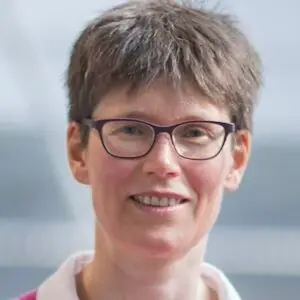
Speaker
Maria Paasivaara
Professor, Software Engineering
School of Engineering Science, LUT University, Finland
CQSE GmbH, Munich
Abstract
After the pandemic, hybrid work, i.e., working partially from the office and partially remotely, such as from home, has become increasingly common in software development organizations. Originally, agile development was designed for single teams working face-to-face. However, large organizations soon noticed its benefits and adjusted the approach for large-scale settings, using various large-scale agile frameworks. Nowadays, the adoption of hybrid work makes the agile set-up even more complicated, especially at scale, since some teams or team members might work fully or partially from home, while others prefer to work in the office. Hybrid work seems to be here to stay, as it brings many benefits for individuals, such as better work-life balance. However, it also creates additional complications, especially for communication and collaboration. Currently, companies are unsure about what kind of rules or practices they should adopt and have several questions they need answered, such as:
- How can we make hybrid work benefit the whole company?
- How should we adjust agile practices to fit hybrid work settings?
- What kind of new practices or rules would fit our company?
In this talk, I will present recent findings from our empirical studies on hybrid work in agile and large-scale agile settings. These findings are based on an interview study in Finnish software companies, an international survey, and a literature review. I will discuss the challenges companies and individuals have faced, the solutions they have tried, and the practices that seem to work in various settings.
About
Maria Paasivaara is a professor of empirical software engineering at LUT University in Finland and an adjunct professor at Aalto University, Finland. Her research interests include software processes, especially in agile and large-scale agile settings, global software engineering, and software engineering educational research. She conducts her research in close collaboration with the industry.
Panels
panel
EuroSPI Conference 2024 and ICSSP 2024 Joint Keynote Panel Session
Harnessing the Potential of Generative AI for Software Systems Development
Abstract
We stand at a pivotal moment in software engineering, with AI-driven approaches poised to enhance the development, testing, and sustainment of software. While Generative AI tools initially sparked excitement for their potential to reduce errors, scale changes effortlessly, and drive innovation, concerns have emerged. These concerns encompass security risks, unforeseen failures, and issues of trust. Empirical research on Generative AI development assistants reveals that productivity and quality gains hinge not solely on tool sophistication but also on task flow redesign and expert judgment. Drawing insights from the study “Architecting the Future of Software Engineering: A National Agenda for Software Engineering R&D” we will focus on the critical technologies and research areas essential for advancing future systems, with the overarching goal of making software a competitive advantage. Our keynote panel will explore the future of software engineering using Generative AI technologies from multiple perspectives. We’ll examine current applications, envision future possibilities, identify research gaps, and identify critical skill sets required by software engineers and stakeholders to harness Generative AI’s potential effectively and responsibly. By fostering a deeper understanding of AI’s role in software engineering, we aim to accentuate its potential and mitigate its risks.
Panel Chair
Anita Carleton, Carnegie Mellon University, Software Engineering Institute Executive Software Solutions Director, IEEE Fellow
Panelists
Dr. Ipek Ozkaya, Carnegie Mellon University Software Engineering Institute Engineering Intelligent Software Systems Technical Director
Dr. Alexander Poth, Volkswagen Audi Group
John Robert, Carnegie Mellon University Software Engineering Institute Software Solutions Deputy Director
Thomas Kropf, President Bosch Corporate Research and Advance Engineering
Dr. Jules White, Vanderbilt University Professor of Computer Science, Senior Advisor to the Chancellor for Generative AI in Education and Enterprise Solutions, and Associate Professor of Biomedical Informatics
panel
ICSSP 2024 Panel Session
Applying Software and Systems Engineering to the UN Sustainable Development Goals
Panel Chair
John Noll, University of Hertfordshire
Panelists
Anmol Bilal, Institute of Software System Engineering, Johannes Kepler University, Austria
Chahrazed Boudjemila, Informatique, IMT-Atlantique, France
Ita Richardson, Professor of Software Quality, Department of Computer Science and Information Systems, University of Limerick, Co-Principal Investigator in Lero, Principal Investigator, Ageing Research Centre
Kseniia Vasylieva, Herman Hollerith Center, Reutlingen University, Germany
Hasan Yasar, Carnegie Mellon University Software Engineering Institute, USA